
Aamurutiini: Talk About Your Morning in Finnish
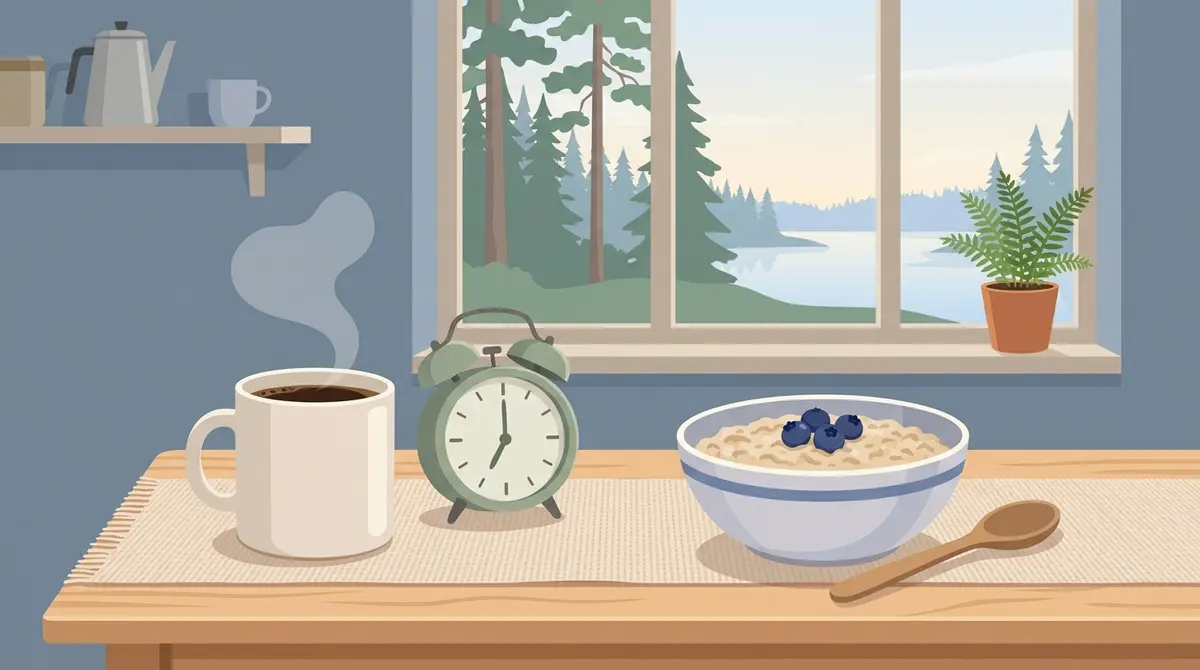
Talking about what you do every day is one of the quickest ways to build conversational confidence. When someone asks you how your day started, or what time you usually wake up, you want simple, natural phrases at your fingertips. Describing your aamurutiini (morning routine) brings together several practical verbs and case forms that you will use again and again in everyday Finnish.
Waking up and getting up: Herätä vs. nousta
Beginners often confuse waking up with actually getting out of bed. In Finnish, these are two distinct actions with different verbs.
The verb for waking up is herätä (to wake up). This is a Type 5 verb, so the ending changes to -ää- before personal endings:
- Herään kello seitsemän. (I wake up at seven o'clock.)
- Heräätkö aikaisin? (Do you wake up early?)
Once your eyes are open, the next step is getting out of bed: nousta (to rise / to get up). You will often hear it with the word ylös (up):
- Nousen ylös sängystä. (I get up from bed.)
- En nouse heti. (I do not get up immediately.)
A common mistake is using herätä when you mean leaving your bed. If you say Herään kello kahdeksan, mutta nousen kello kahdeksan ja puoli, a native speaker understands right away: you were awake at eight, but scrolled on your phone until eight-thirty! If you want to talk about specific days, remember how to say on Maanantaina to build full sentences.
Bathrooms and clothes: Suihku, hampaat ja vaatteet
Next come the bathroom habits and getting dressed. Pay close attention to the verb forms and prepositions here:
To take a shower, Finns use the verb käydä (to visit / to take a trip) with the inessive case (-ssa):
- Käyn suihkussa. (I take a shower.)
Do not say "otan suihkun"; that is a literal translation from English and sounds unnatural.
For teeth, use the verb pestä (to wash):
- Pesen hampaat. (I brush my teeth.) Notice that Finnish says "wash teeth" without needing a possessive word like "my".
When you put on clothes, you have two common options:
- Puen vaatteet päälle. (I put clothes on.)
- Pukeudun nopeasti. (I get dressed quickly.)
Memory trick: Think of pestä (to wash) like a detergent rinse for your hampaat (teeth) and kasvot (face).
Breakfast and heading out: Syödä, juoda ja lähteä
In Finland, breakfast is serious business, and almost everyone starts with a warm drink.
When talking about eating and drinking in your routine, use the partitive case for the food and drink:
- Syön aamupalaa. (I eat breakfast.)
- Juon kahvia. (I drink coffee.)
- Syön puuroa. (I eat porridge.)
Using the basic dictionary form (kahvi, aamupala) after juon or syön is a frequent beginner slip. Stick with kahvia and aamupalaa because you are consuming an unspecified amount of food or drink.
Finally, you step out the door:
- Lähden töihin. (I leave for work.)
- Lähden kouluun. (I leave for school.)
- Lähden kotoa kello kahdeksan. (I leave home at eight.)
Notice the ending -in in töihin (into work) and -un in kouluun (into school). Finnish looks forward toward your destination. If you want to talk about what you do when you arrive, check out our guide on how to talk about jobs in Finnish.
Key words for your morning routine
| Finnish | English | Example |
|---|---|---|
| herätä | to wake up | Herään aina herätyskelloon. (I always wake up to an alarm clock.) |
| nousta ylös | to get up | Nousen ylös vartin yli seitsemän. (I get up at quarter past seven.) |
| käydä suihkussa | to take a shower | Käyn suihkussa aamulla. (I take a shower in the morning.) |
| pestä hampaat | to brush teeth | Pesen hampaat aamupalan jälkeen. (I brush my teeth after breakfast.) |
| pukeutua | to get dressed | Pukeudun lämpimästi. (I dress warmly.) |
| aamupala | breakfast | Mitä syöt aamupalaksi? (What do you eat for breakfast?) |
| keittää kahvia | to brew coffee | Keitän aamulla kahvia. (I brew coffee in the morning.) |
| lähteä kotoa | to leave home | Lähden kotoa ajoissa. (I leave home on time.) |
Morning habits in Finland
Finnish mornings are famously fuelled by kahvi (coffee). Finland consistently ranks among the highest coffee consumers per capita in the world. Many Finns brew filter coffee (suodatinkahvi) before doing anything else.
A classic Finnish breakfast is kaurapuuro (oatmeal porridge), often served with a dollop of butter (voisilmä, literally "butter eye") or fresh berries in late summer and frozen ones in winter. Rye bread (ruisleipä) topped with butter, cheese (juusto), and cucumber slices (kurkku) is another staple.
Punctuality is deeply rooted in Finnish work and school culture. People aim to leave home so they arrive exactly when scheduled, neither twenty minutes early nor two minutes late. Describing your schedule with precise time phrases shows respect for this cultural habit.
Quick practice
Test your knowledge with these three quick questions. Choose the correct word or form.
-
"I wake up at six." Choose the right verb: Nousen or Herään? _____ kello kuusi.
-
Which sentence is natural Finnish for "I take a shower"? a) Otan suihkun. b) Käyn suihkussa.
-
Complete the sentence with the correct form of kahvi: Aamulla minä juon _____ (kahvi).
Answers
- Herään kello kuusi. (Herätä refers to waking up, while nousta means getting out of bed.)
- b) Käyn suihkussa. (Finns use the verb käydä + inessive -ssa.)
- kahvia (Use the partitive form after verbs of eating and drinking.)
Practise this with Kielo
Try describing your own morning out loud using these verbs. In your next Kielo chat session, answer the prompt about what you do before leaving the house, and review the verb conjugations in your daily study plan. Start with this simple sentence today: Herään aikaisin ja keitän kahvia.
- Learn Finnish
- Daily Routines
- Finnish Verbs
- Vocabulary
- A1 Finnish
- A2 Finnish
Practise this Finnish with Kielo
AI conversations, short articles at your level and exercises built around your mistakes.
Download Kielo